


 Platform Overview
The Work OS for AI-powered Work
Platform Overview
The Work OS for AI-powered Work
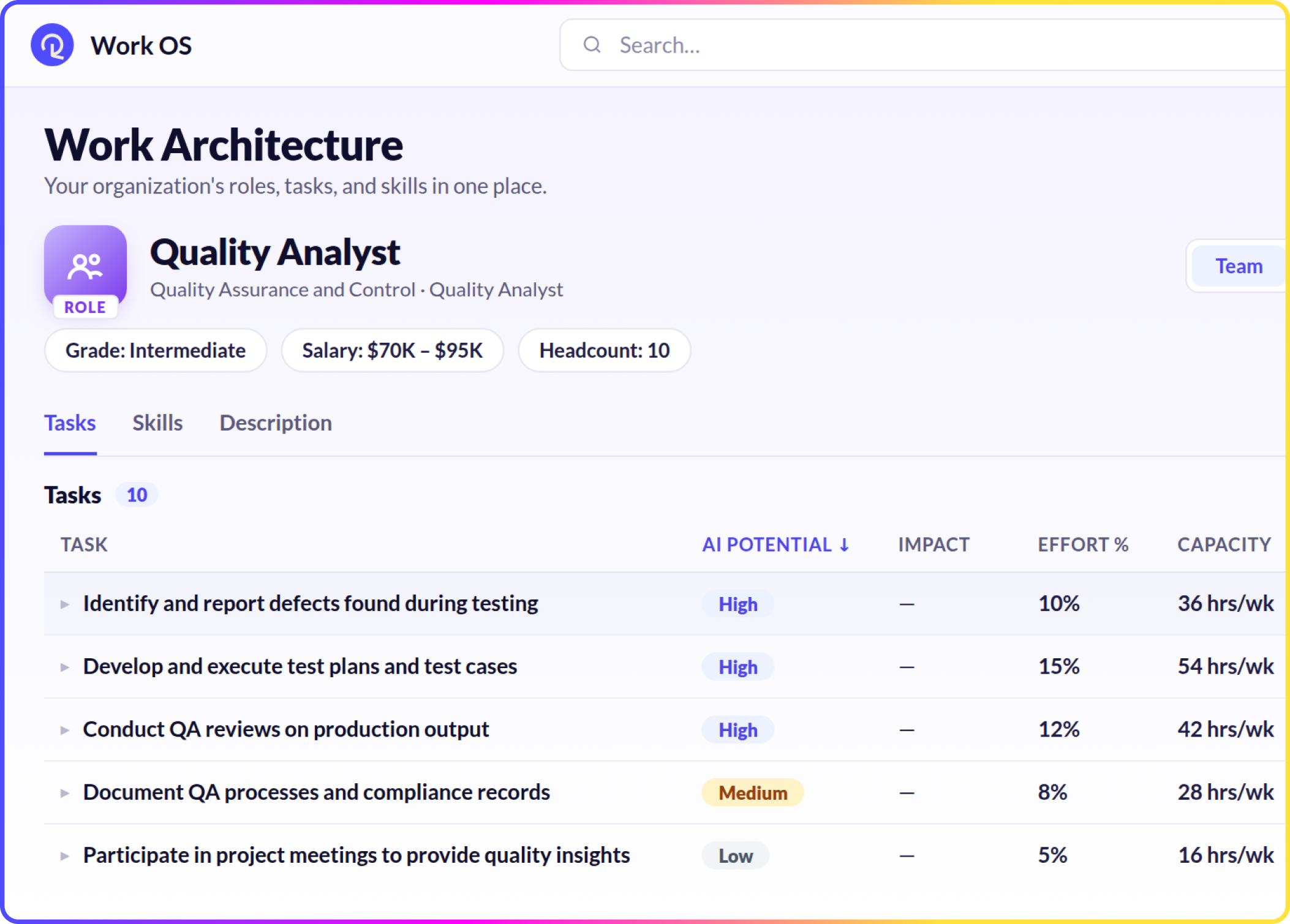
 Work Architecture
Live entity model of your enterprise
Work Architecture
Live entity model of your enterprise
 Map
Build the Work Context Graph
Map
Build the Work Context Graph
 Analyze
Your GPS for reinvention
Analyze
Your GPS for reinvention
 Build
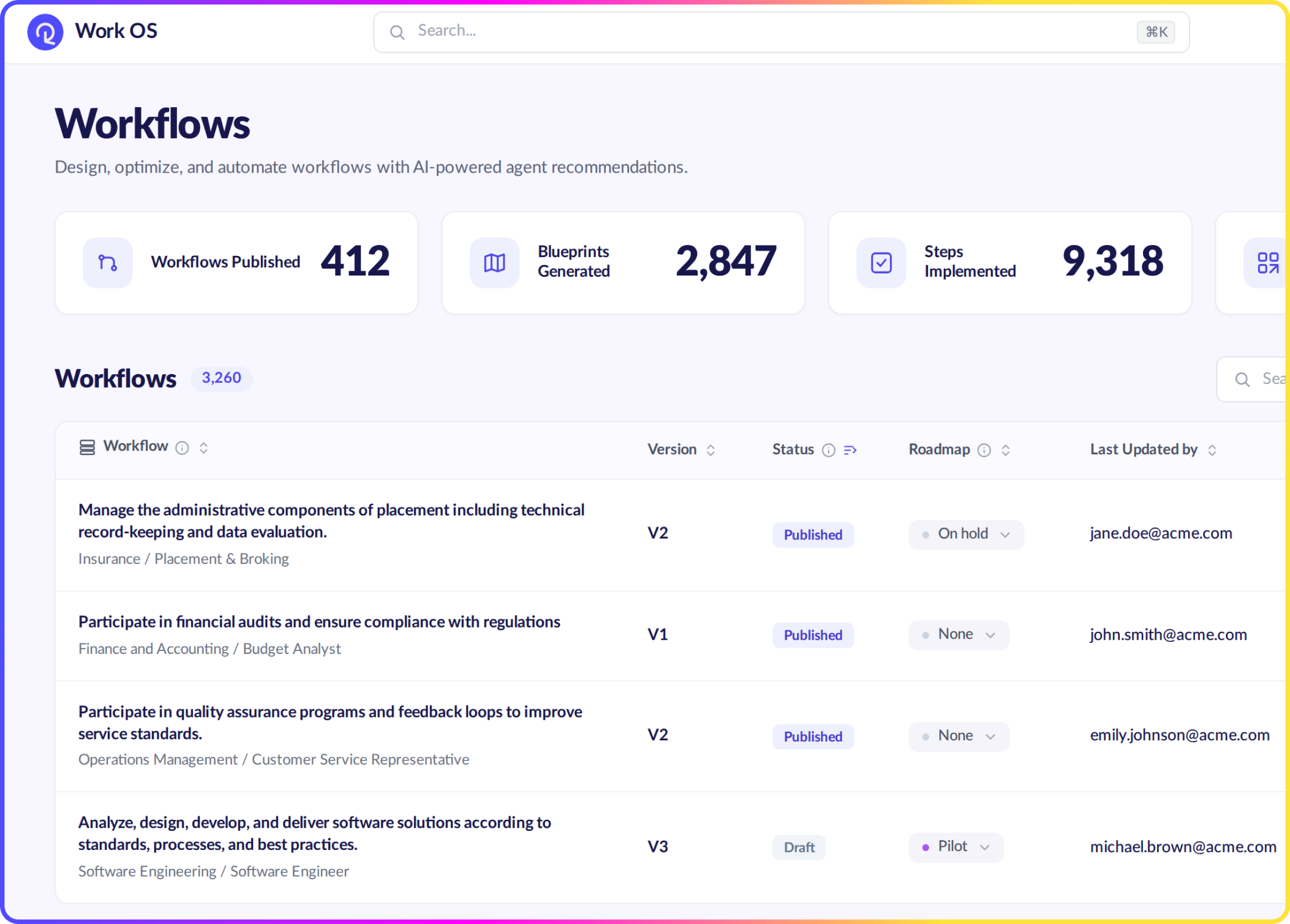
Builder Studio · Workflows + agents
Build
Builder Studio · Workflows + agents
 Run
Deliver the new way of working
Run
Deliver the new way of working
 Measure
Track real, board ready ROI
Measure
Track real, board ready ROI
 Log
Source of truth · audit trail
Log
Source of truth · audit trail
 Update
Keep architecture current
Update
Keep architecture current
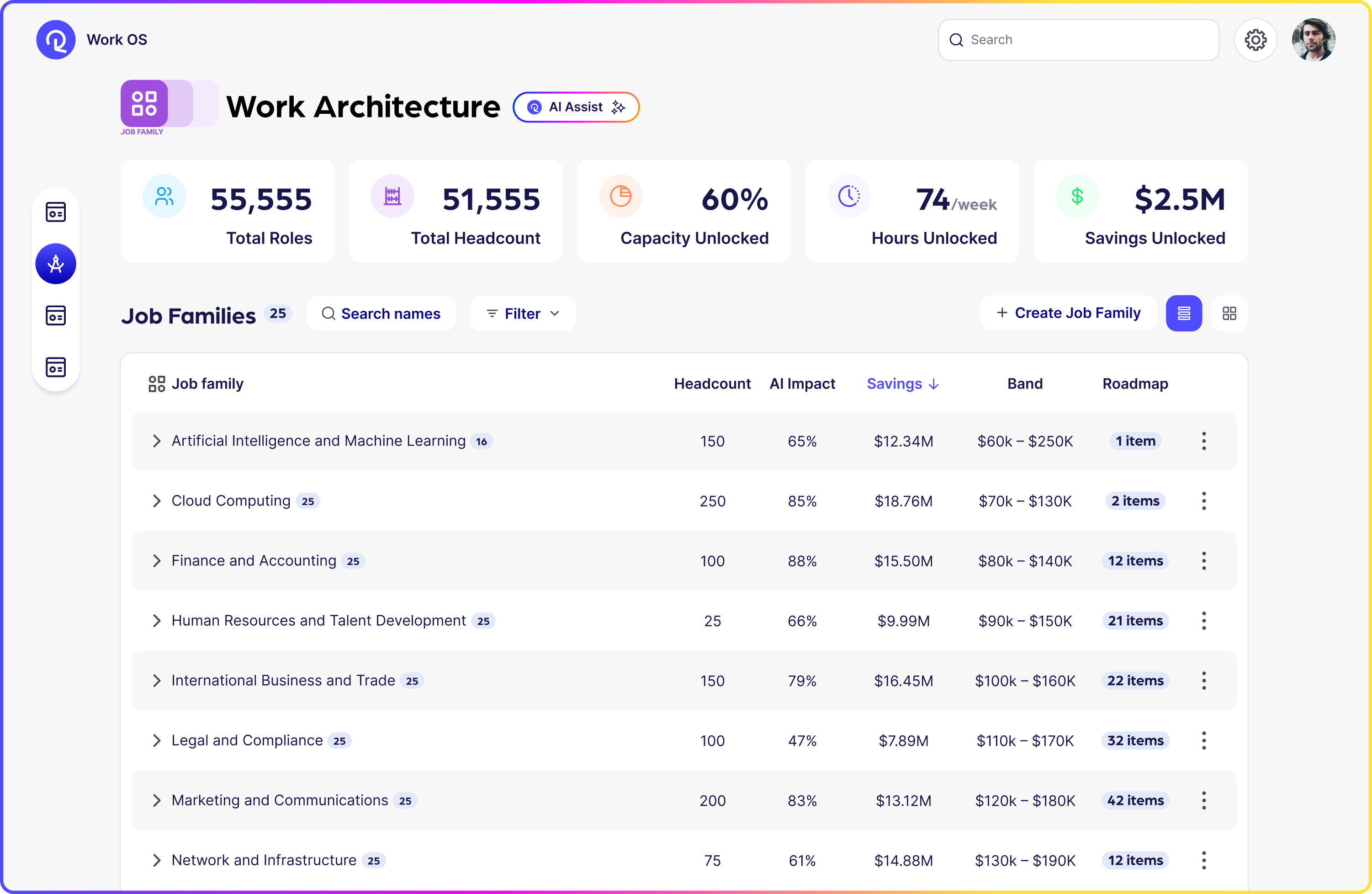
Work doesn't stand still. New workflows deploy. Agents take on new tasks. Roles shift. Reejig keeps the Work Architecture current automatically and continuously. No more annual rebuilds.
RE-ENGINEER ROLES
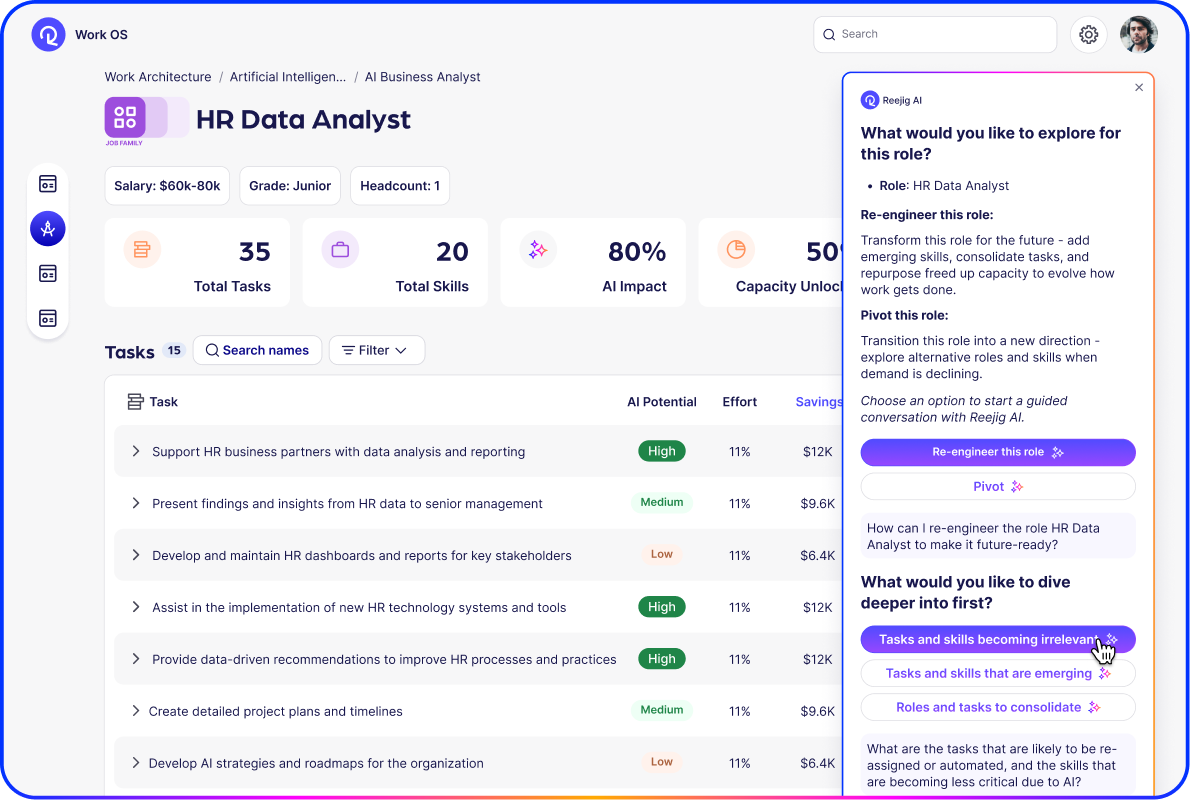
As work changes, roles change too. Reejig identifies which roles need re-engineering and gives you the live architecture to redesign them against.
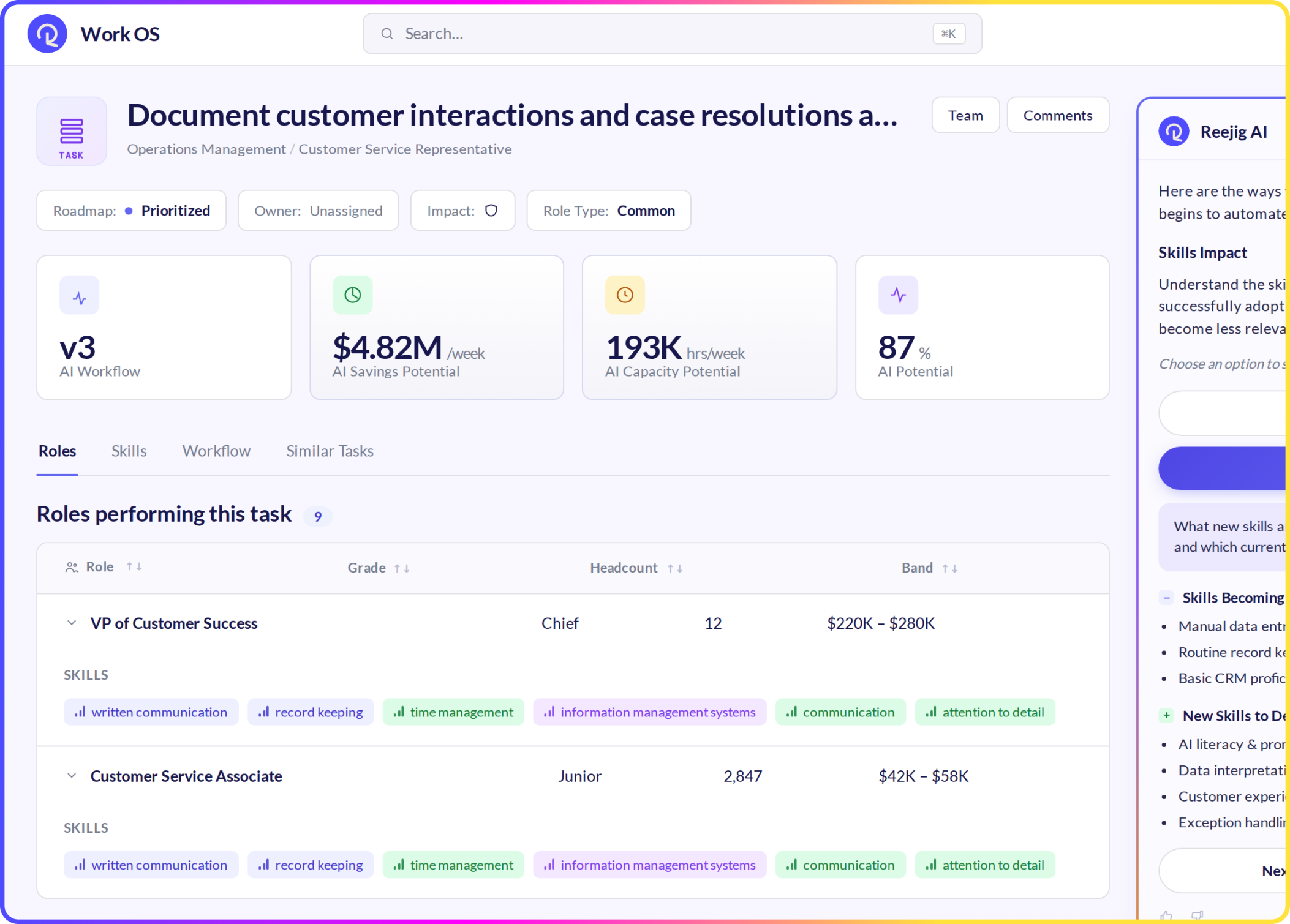
For every role that's shifting, Reejig shows your people how they can pivot. Based on the tasks they already run, the skills they already have, and the work your enterprise actually needs. So nobody gets left behind.
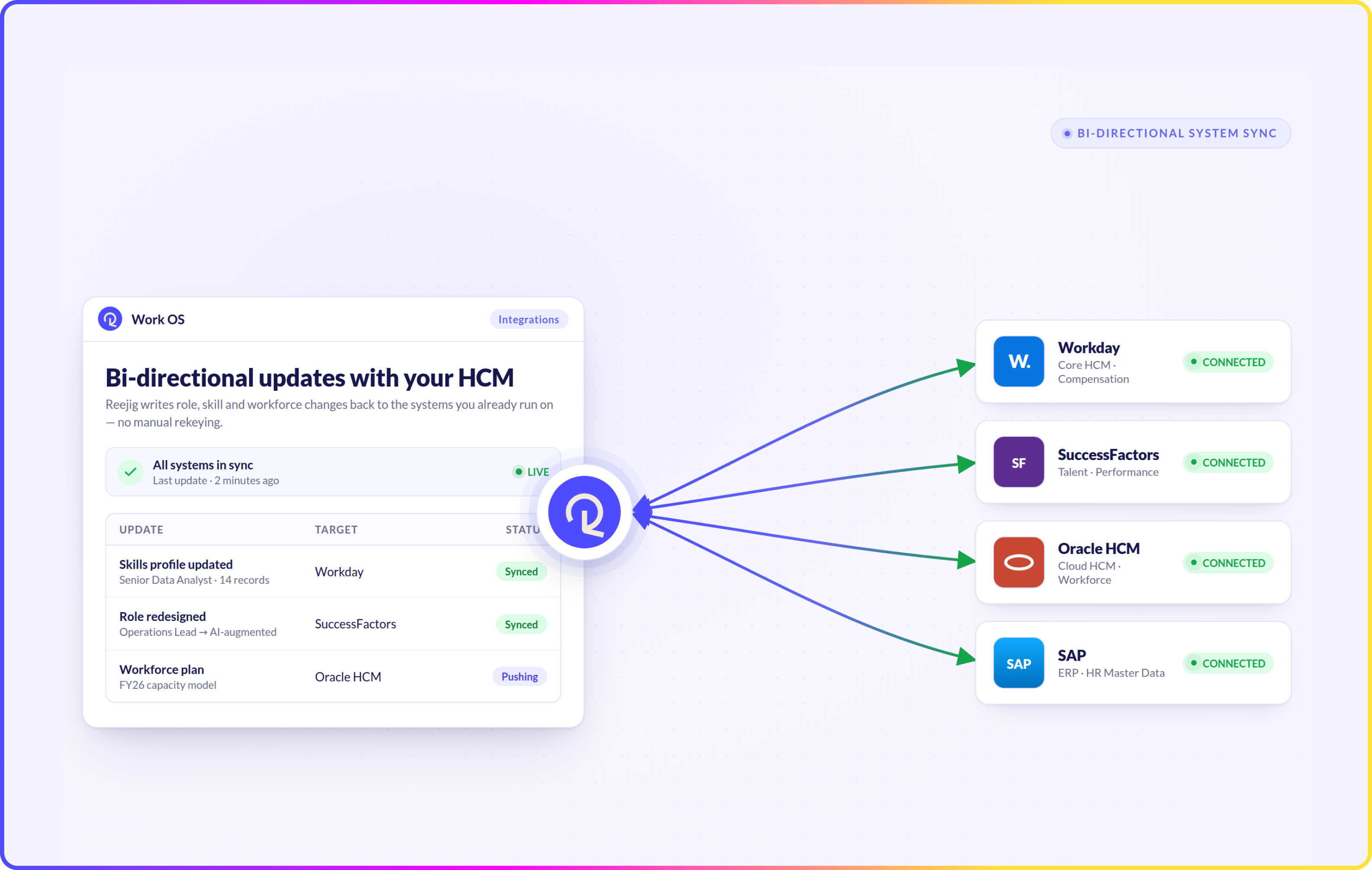
Updates flow back into Workday, SuccessFactors, Oracle HCM, and SAP automatically — no duplicate sources, no manual sync. The same governed data feeds Databricks, Snowflake, and your BI stack via API, so every system, report, and decision runs off the same foundation.
Work doesn't stand still. New workflows deploy. Agents take on new tasks. Roles shift. Reejig keeps the Work Architecture current automatically and continuously. No more annual rebuilds.
As work changes, roles change too. Reejig identifies which roles need re-engineering and gives you the live architecture to redesign them against.
For every role that's shifting, Reejig shows your people where they can pivot to. Based on the tasks they already run, the skills they already have, and the work your enterprise actually needs. So nobody gets left behind.
Every update flows back into Workday, SuccessFactors, Oracle HCM, SAP. No duplicate source of truth. No manual sync. Your enterprise systems stay current without anyone having to rebuild them.